
Something about us
In line with our values, Building Power of the OutCaste (BPO) has intentionally invited leading voices from the caste justice and minority rights sectors to join us as fellows. These individuals reflect our commitment to equity and justice and include caste-affected people, minority rights advocates, and allies.
BPO is committed to increasing the visibility of anti-caste and minority rights leaders whose contributions are often overlooked, despite their significance to the broader movement for social justice. By engaging these fellows, we aim to strengthen our work through meaningful collaboration and advance our mission with greater impact.
Our fellows bring a wealth of professional expertise alongside valuable lived experience. Their insights enrich BPO’s programmes and support the development of the next generation of intergenerational leaders. Their involvement is essential to fostering an interdisciplinary approach that strengthens our collective efforts towards caste justice and minority rights.

Khaoula Ksiksi is a Gender, Equality, Diversity & Inclusion Advisor at the International Rescue Committee (IRC), integrating intersectionality into IRC’s global program design. A pioneer in Tunisian civil rights, she helped secure the nation’s first anti-discrimination law and co-founded organisations for Black women and queer-feminist advocacy. Formerly with the Rosa Luxemburg Foundation, Khaoula bridges racial justice and gender equity to drive structural transformation. At the heart of her work is a deep belief: no one is free until we all are.

Ling’s work focuses on supporting civil society resilience through 20+ years of philanthropy and exchange. Currently a Partner at Rights CoLab and a Senior Fellow at Leiden University. Ling previously led a subregional program working on human rights issues across East Asia at a global philanthropic private foundation. He served as the Program Director at the Henry Luce Foundation and directed various initiatives at the National Committee on US-China Relations. He is a trustee of Lingnan Foundation and BYkids.

Chet Narayan Rasaili has over a decade of experience in human rights, governance, and minority advocacy. A former UN OHCHR Senior Minority Fellow and U.S. State Department Professional Fellow, he has consulted extensively on social inclusion and democratic governance. He was previously the chairperson of Dalit Youth Alliance, a prominent youth-led network primarily based in Nepal, established in 2012 to end caste-based discrimination, promote equality, and advocate for human rights. He holds a Master’s in Political Science and a Law degree from Tribhuvan University.

Mary James Gill is a Human Rights Lawyer and the former Punjab Assembly Member (2013–2018) with 15 years of experience in legislative reform and minority protection. She led key provincial initiatives for women’s empowerment and religious minority rights, specialising in the intersection of caste, religion, and labour. A policy advisor to the UNDP, Amnesty International, and EU forums, her award-winning work has been featured in The New York Times and the BBC. She is currently heading the Center for Law & Justice (CLJ), minority-led policy research, advocacy, and development organisation, working for marginalised minority communities in Pakistan. She is also the founder of Pakistan’s first digital advocacy campaign, Sweepers are Superheroes.

Hridi is a dedicated professional advocating for the rights of Harijan and Indigenous women in Bangladesh. She focuses on community leadership, human rights education, and creating sustainable livelihoods for these communities. Her work encourages marginalised women to confront systemic prejudice and become decision-makers. Hridi also leads initiatives to combat hate speech and caste-based stigma while advocating for national policy reforms on land rights, housing security, and social justice. She currently heads a portfolio at a women’s rights and women-led group working to build up the capacity of socially excluded women in South Asia.
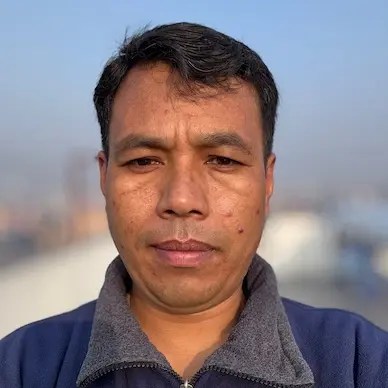
Dev Kumar Sunuwar is an Indigenous rights advocate, journalist, and legal scholar. He currently oversees the Asia Programme for Cultural Survival and is a Trustee for the UN Voluntary Fund for Indigenous Peoples. Dev co-founded Indigenous Television, South Asia’s first multilingual Indigenous channel with a goal to amplify the voices of Nepalese indigenous peoples and promote their languages through media. He currently leads the Indigenous Media Caucus at the UN. Dev currently teaches Public International Law at the Kathmandu School of Law, he holds a Master’s degree in law, political science, and journalism.

Kailash Chandro is a Dalit human rights defender and researcher in Bangladesh. He collaborates with international bodies like Arisa and academic institutions to advocate for Dalit rights and policy reform. A leader within Bangladesh Dalit Human Rights (BDHR) and the Bangladesh Rabidas Forum (BRF), Kailash has published influential research on caste-based discrimination and climate resilience. His work bridges grassroots activism with international conferences to drive social change for marginalised communities.

Ranjita Pariyar is a social development professional with over 10 years of experience advancing Dalit rights and gender equality in Nepal. Currently a Project Coordinator at the Feminist Dalit Organization (FEDO), she has served as a Gender Rights Expert for the Asia Dalit Rights Forum and represented Dalit interests at the UN Minority Forum in Geneva. She holds a Master’s in Sociology, and specialises in project management, Gender Equality Social Inclusion advocacy, and community empowerment.

Krishna Bahadur Sunar (Krishna Gahatraj) is a disability-inclusive development expert and founder of the Dalit with Disabilities Association Nepal (DDAN). His work centers on the intersection of caste, disability, and gender, advocating for marginalised communities within global frameworks like the UN Convention on the Rights of Persons with Disabilities (CRPD) and Sustainable Development Goals (SDGs). Krishna brings South Asian perspectives to international human rights conversations to advance inclusive justice and structural reform.

Melanie Proctor is a civil rights attorney with two decades of litigation experience. She served as civil rights coordinator for the U.S. Attorney’s Office in San Francisco, California, during which time she helped secure a landmark $7.73 million disability rights settlement with the Law School Admissions Council. In more recent years, as a state civil rights prosecutor, she negotiated a settlement on behalf of a farm labourer who survived sexual assault and litigated a caste discrimination case against Cisco. The Cisco case established the proposition that a person subjected to caste discrimination could proceed using a fictitious name. Melanie is a 2003 graduate of University of California, Davis School of Law.

Som Niroula is a human rights defender with a decade of experience promoting social justice in Nepal and South Asia. Currently focusing on minority rights, labour protections, and freedom of expression, he previously worked on peace initiatives at the South Asia Forum for Human Rights (SAFHR). Som holds Masters’ degrees in Peace Education (UPEACE) and Anthropology (Tribhuvan University) and is a published author on federalism and forced migration.

Rup Sunar is a human rights activist and Chair of the Dignity Initiative, a Kathmandu-based research and advocacy organisation. A former UN OHCHR Senior Minority Fellow, he works to address systemic caste inequalities through policy engagement and global advocacy. Rup convenes the Global Dialogue on Caste Studies in South Asia and is an alumnus of the U.S. State Department’s IVLP and a former Visiting Fellow at the European Centre for Minority Issues.

Pirbhu Lal (Satyani) is a human rights expert and Member of Pakistan’s National Commission on the Rights of the Child. A Fulbright Humphrey Fellow and UN OHCHR Minority Fellow, he has over 20 years of experience advocating for Dalit, minority, and women’s rights. The author of Humain Bhi Jenay Do, Pirbhu co-founded the Pakistan Dalit Solidarity Network and holds an LL.B. and Master’s in Philosophy. He is a 2025 recipient of the Franco-German Award for Human Rights.

Ms. Anju Kandel is a social worker and advocate for Gender Equality and Social Inclusion (GESI), with a strong focus on the rights of women and minority communities in Nepal. She leads a project at Collective Campaign for Peace (COCAP), where she leads on the protection of women & human rights defenders. She has been involved in capacity building, protection, advocacy. She has previously worked with Jagaran Media Center (JMC) and Feminist Dalit Organization (FEDO), contributing to efforts aimed at eliminating caste and gender based discrimination. Ms. Kandel holds a Master’s degree in Conflict, Peace, and Development Studies.

Nirthika Mahalingam is a storyteller, grantmaker, and minority rights advocate dedicated to strengthening the power and visibility of underrepresented communities. She has worked across the philanthropic, human rights, and local government sectors. Her work focuses on shifting resources and decision-making to underrepresented community actors. She is leading a global caste justice project, in collaboration with a global INGO, examining the location of power for intergenerational and first-generation leaders involved in caste and minority rights. Presently, she is hosting a podcast, discussing caste and political power with various human rights stakeholders. Nirthika holds a Master’s degree in Politics of Conflict, Rights & Justice from SOAS University of London.